The issue
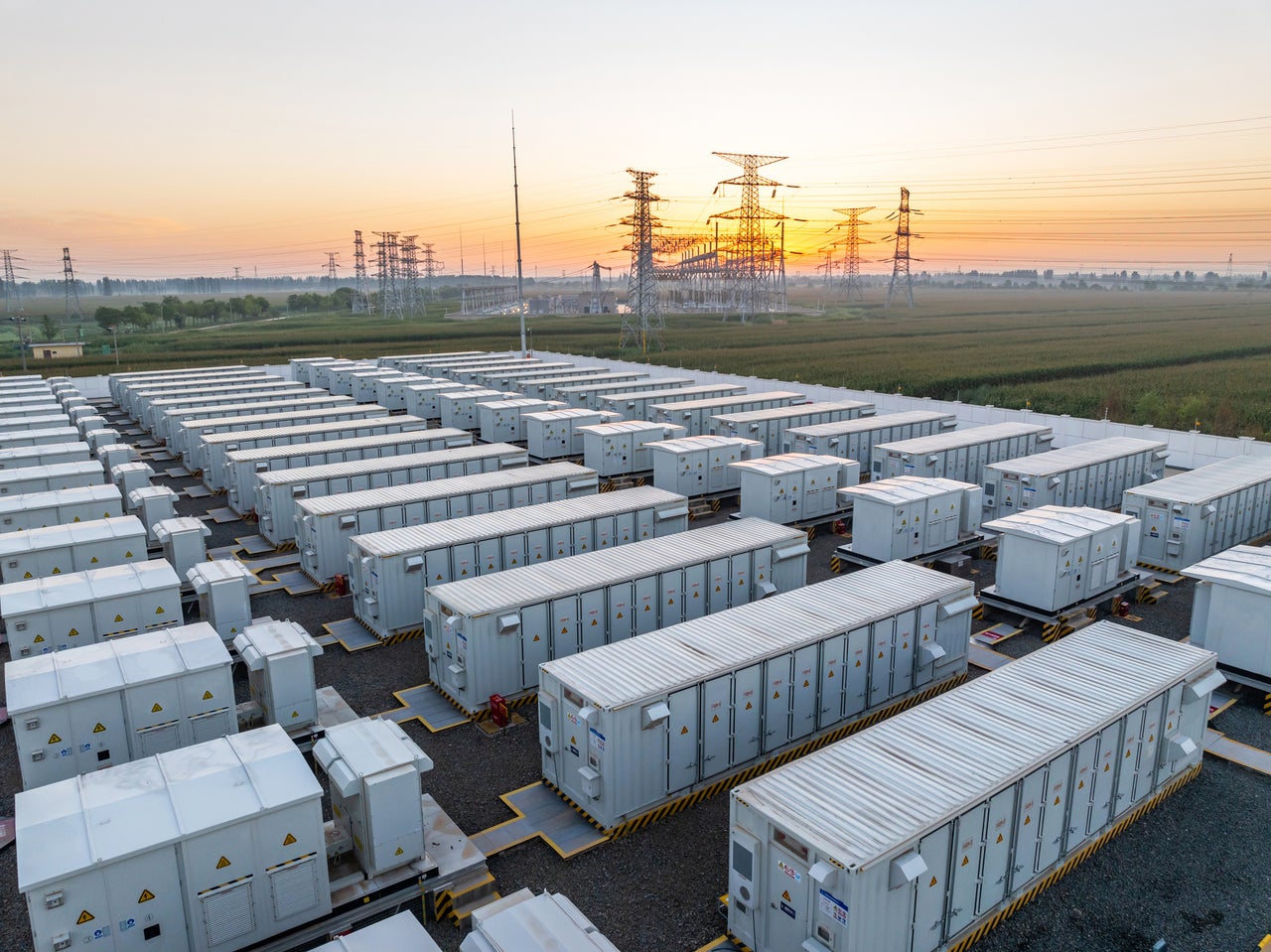
As part of the development of a new agrivoltaic park, a renewable energy company approached Metravib Engineering to conduct a predictive acoustic assessment of its site. The project incorporates not only rows of photovoltaic panels but also a Battery Energy Storage System (BESS) and several electrical transformer and delivery substations. The objective was twofold: guarantee the future site’s compliance with ICPE (Classified Installations for the Protection of the Environment) regulatory requirements, and secure the project’s social acceptance among local residents.
The challenge: Managing noise emergence in an ultra-quiet environment
Installing industrial equipment in a rural environment poses a major challenge for acoustic integration:
- Almost non-existent background noise: The initial state of the site revealed a highly quiet nocturnal sound environment, with noise levels dropping as low as 21 dBA at night. Under these conditions, the slightest technical noise source (ventilation, transformers) becomes distinctly audible.
- Risk of pronounced low-frequency tonality: Electrical equipment (inverters, transformers) often exhibits strong acoustic radiation in low frequencies, particularly around the 63 Hz band. This can generate a humming phenomenon that is highly disruptive to the neighborhood, even when overall regulatory thresholds are met.
The solution: Predictive modeling and proactive engineering
To de-risk the project before ground was even broken, our engineers deployed an advanced characterization and simulation methodology:
- Measurement campaign: Sound level meters were deployed near Regulated Emergence Zones (the closest dwellings) to capture actual residual noise levels, both day and night.
- Creation of a digital twin: We modeled the complete topology of the site and integrated surrounding buildings to accurately simulate acoustic propagation.
- Simulation of operating scenarios: Sound sources (substations, batteries, inverters) were modeled using distinct acoustic power spectra for daytime and nighttime, accounting for variations in BESS operation based on temperature.
Conclusion: A secured permit and prevented noise pollution
The study provided the client with reliable project de-risking and concrete optimization recommendations:
- Validation of ICPE compliance: The simulation proved that the calculated specific noise levels complied with the limits of 60 dBA during the day and 50 dBA at night at the property line.
- Control of noise emergence: All overall noise emergence levels calculated at the dwellings were found to comply with authorized limits.
- Proactive mitigation plan: To prevent any risk of complaints linked to the extremely low background noise and low frequencies (63 Hz), our experts recommended optimizing the BESS layout. The solution: Installing acoustic screens, alongside commissioning measurements to confidently validate regulatory compliance.